IMTF — Building Design as a Strategic Function in a RegTech Platform
Establishing design as a strategic capability in a RegTech company, unifying products, introducing research, building a team, and reshaping how product decisions were made.
Client
IMTF
Service
Product Design
Date
June 2019 - May 2021
Project Overview
Role: Head of Product Design
Context: RegTech platform for AML, KYC, screening, and case management
Company stage: ~150 employees, internationally established, design maturity: early
When I joined IMTF as Head of Product Design, I was the first and only designer in the company. The products were technically strong and commercially successful, but design had never been a formal discipline. My role was not just to “design better screens”, but to shape how the company builds products — structurally, culturally, and methodologically.
Starting with the business, not the interface
Before proposing solutions, I focused on understanding the organisation itself.
In my first weeks, I conducted structured one-to-one stakeholder interviews across levels and departments — product, engineering, sales, delivery, and leadership. This was part onboarding, part diagnosis. The goal was to understand:
how decisions were made,
where friction existed,
what was working surprisingly well,
and where design could create measurable value.
I synthesised these conversations into a concise findings report, which I shared with my reporting line (Head of Product) and the CEO. This created early alignment, validated assumptions, and helped define a clear mandate for my role.
From this, four strategic objectives emerged:
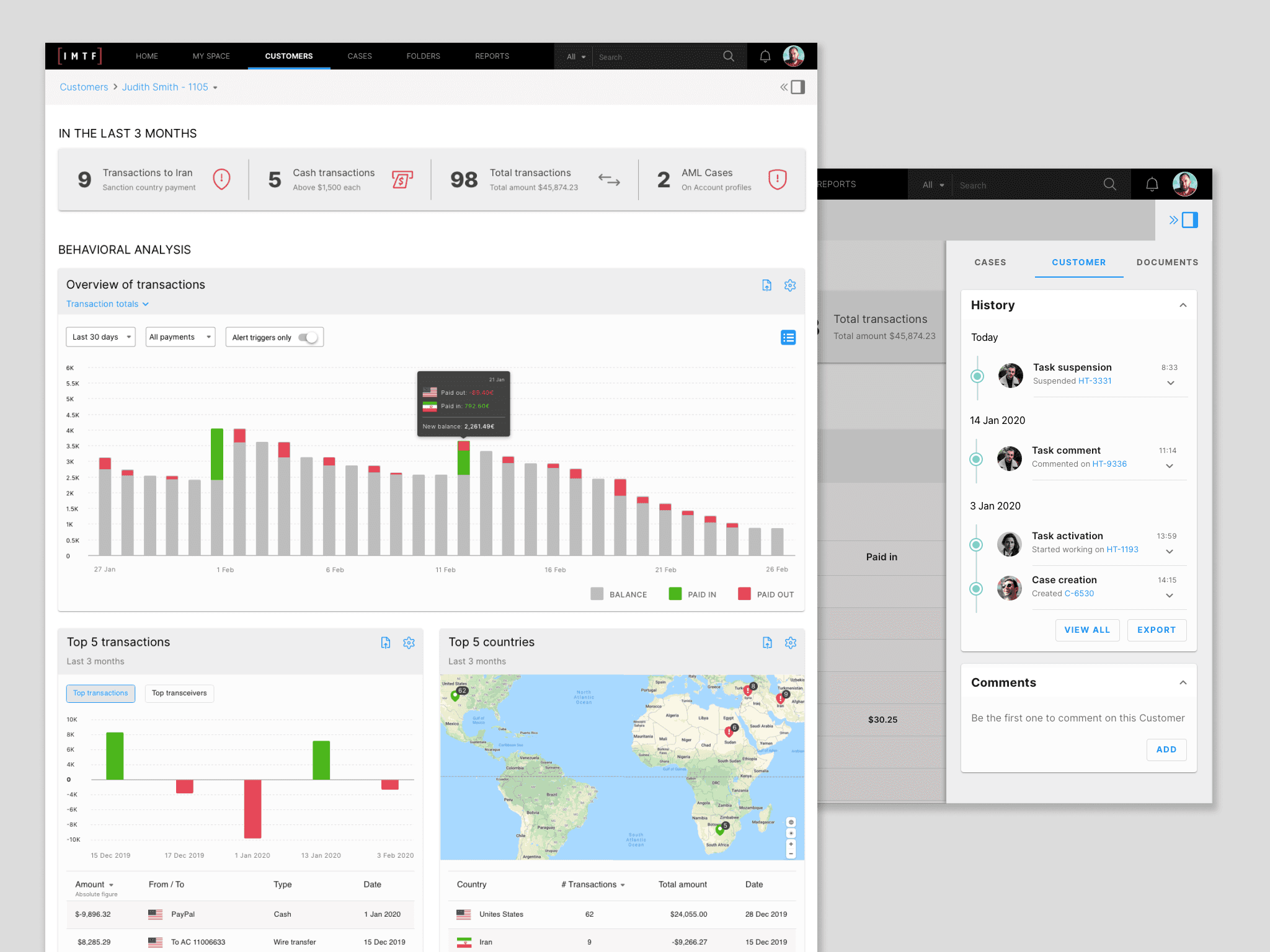
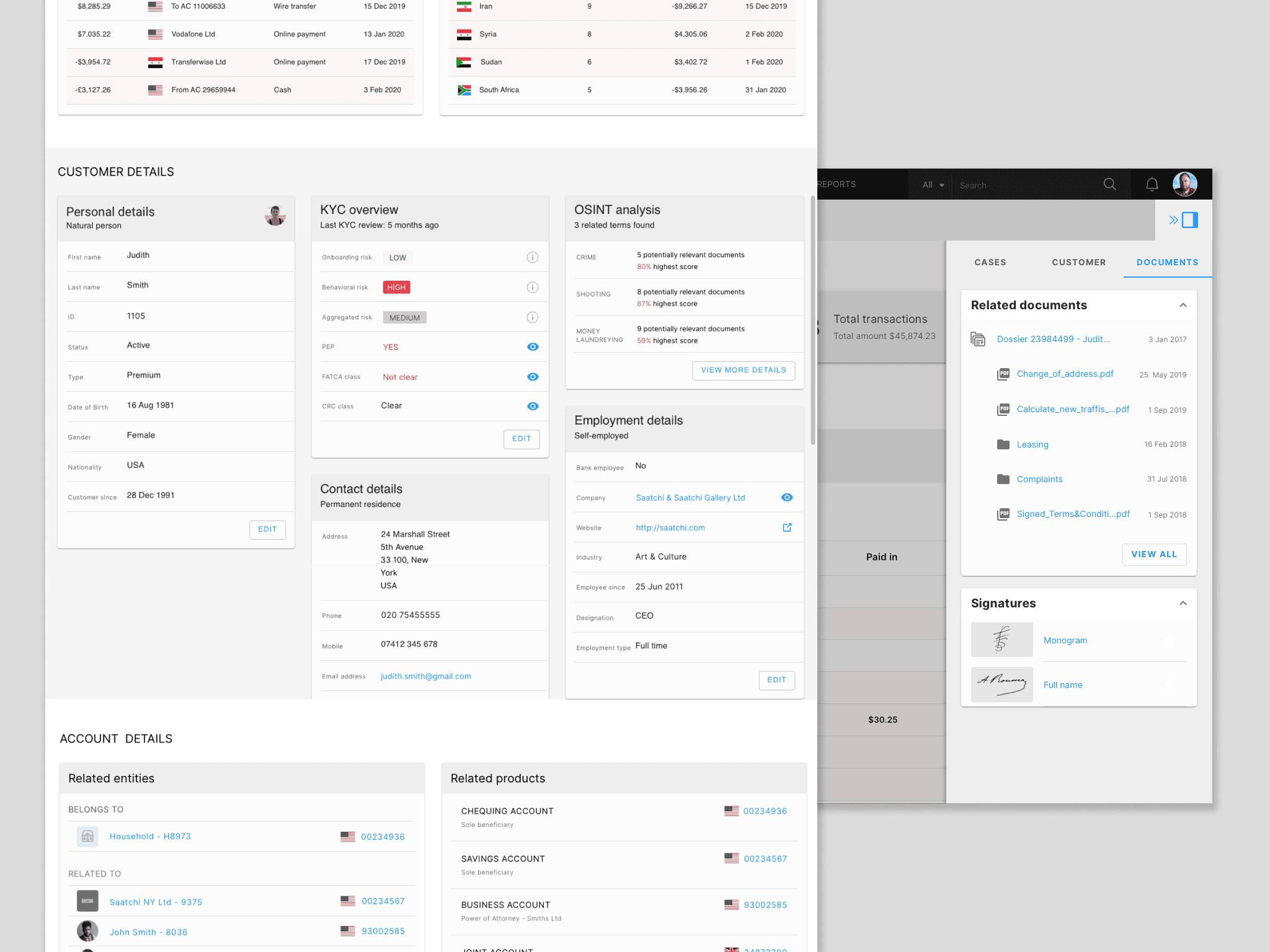
Unify IMTF’s fragmented products into a single, coherent platform.
Define a clear product development process and ways of working.
Build an internal design team and capability.
Establish a user research practice that informs real decisions.
All four were delivered over time.
Key Highlights
Introducing user research in a low-budget, high-stakes environment
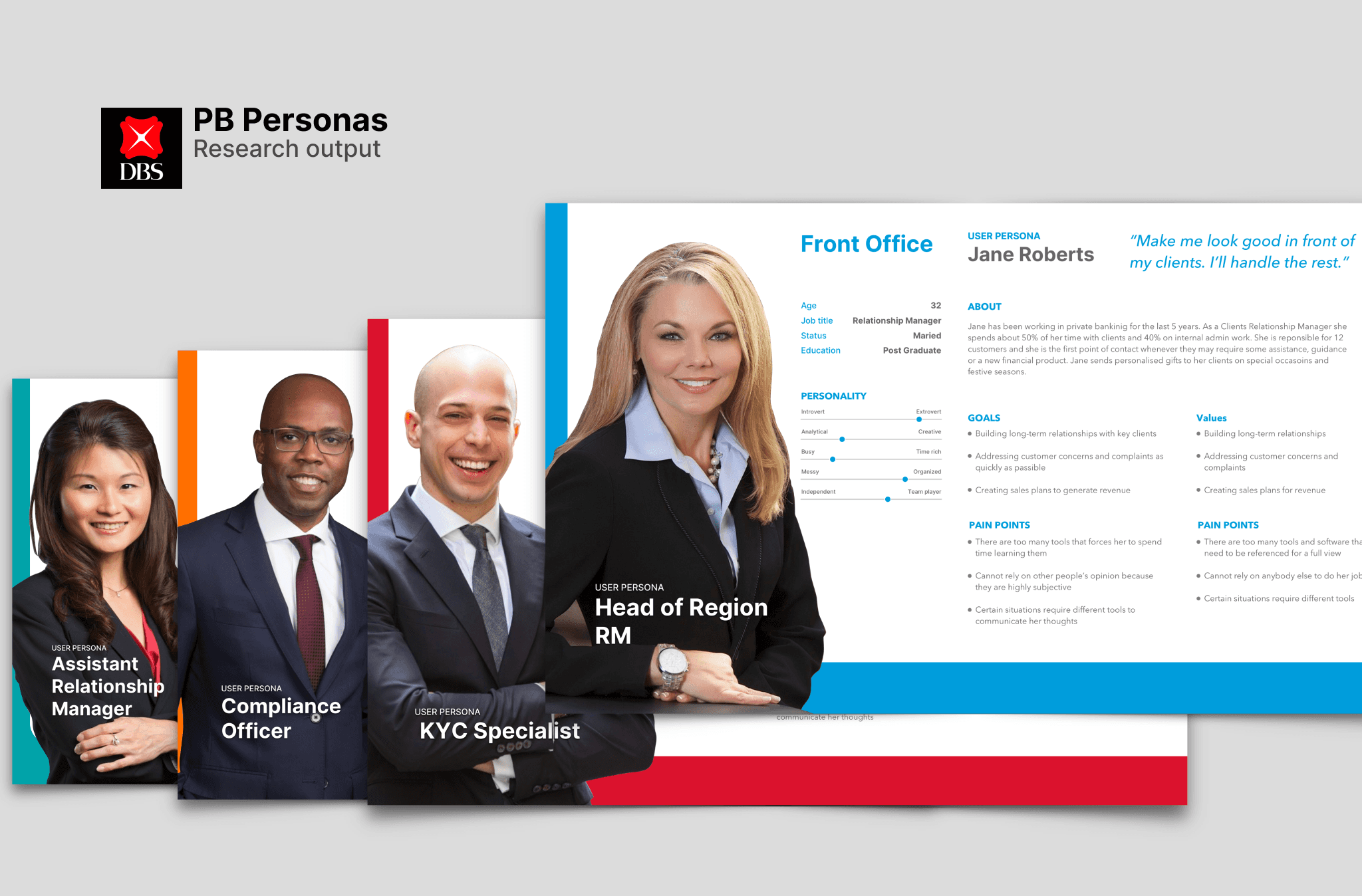
At the time, IMTF had no user research budget and no in-house experience running research. Rather than treating this as a blocker, I led the research myself.
I partnered with one of IMTF’s largest clients, DBS Bank, who were at an early discovery phase. This allowed us to run in-depth interviews and usability testing with real users — relationship managers, risk and compliance officers, and back-office administrators — using early prototypes I designed.
The impact was immediate:
discussions shifted from opinion-led debates to evidence-based decisions,
priorities became clearer,
and trade-offs were easier to justify.
The product teams were already working in two-week Agile sprints, so I adapted research and discovery practices to fit that cadence rather than imposing a parallel process. Research became a practical input into delivery, not a theoretical exercise.
Embedding design into product and engineering workflows
Throughout this work, I collaborated closely with the Head of Product and Head of Engineering, with the CEO kept regularly informed of direction and rationale. Design was positioned as a partner to product and engineering, not a service function downstream.
One key challenge was consistency. Prior to my arrival, front-end engineers were making most design decisions and defining the visual language themselves. To support them — not override them — I created IMTF’s first Design System, establishing shared principles, components, and patterns across products.
We introduced InVision Enterprise to support design systems and prototyping, replacing Balsamiq for early sketches. UI component design was done in Sketch. More importantly, we aligned on how design decisions were made and shared, reducing friction between design and engineering.
Building the team and the foundations
Once the groundwork was in place, I built the design team:
hired a senior UX designer,
hired a UI / visual designer,
established design rituals and critique practices,
and formalised collaboration with engineering and product.
This shifted design from an individual contributor function to a sustainable capability.
Outcome and impact
IMTF’s products were unified under a clearer platform vision.
Core AML, onboarding, and investigative workflows were redesigned to reduce operational effort and improve clarity.
User research became a credible input into product decisions.
Product development friction decreased through clearer workflows, shared standards, and better cross-team alignment.
Design became embedded in how IMTF builds products, not added at the end.
Go Back

