FNZ - Design leadership in a platform company under constant change
Helped transform FNZ from client-specific delivery to a scalable platform, leading UX, research, and AI-driven product experiences at global scale.
Client
FNZ
Service
Digital Transformation
Date
May 2022 - January 2026
Project Overview
Context
I joined FNZ in 2022 through one of its many acquisitions—specifically as part of Appway, a Swiss fintech known for its strong product culture and workflow automation platform for financial services.
At the time, Appway was a well-structured technology company with a clear product focus and a healthy people culture. FNZ, by contrast, was operating at an entirely different scale: a global wealth-tech provider serving hundreds of financial institutions, with deeply customised client solutions and a strong operational DNA.
The acquisition marked the beginning of a significant transition—not just for the products, but for how FNZ thought about design, platforms, and scale.
From bespoke delivery to platform thinking
Historically, FNZ had been exceptionally good at serving large clients through bespoke implementations. But by 2022–2023, it became clear that this model wouldn’t sustain the company’s growth ambitions.
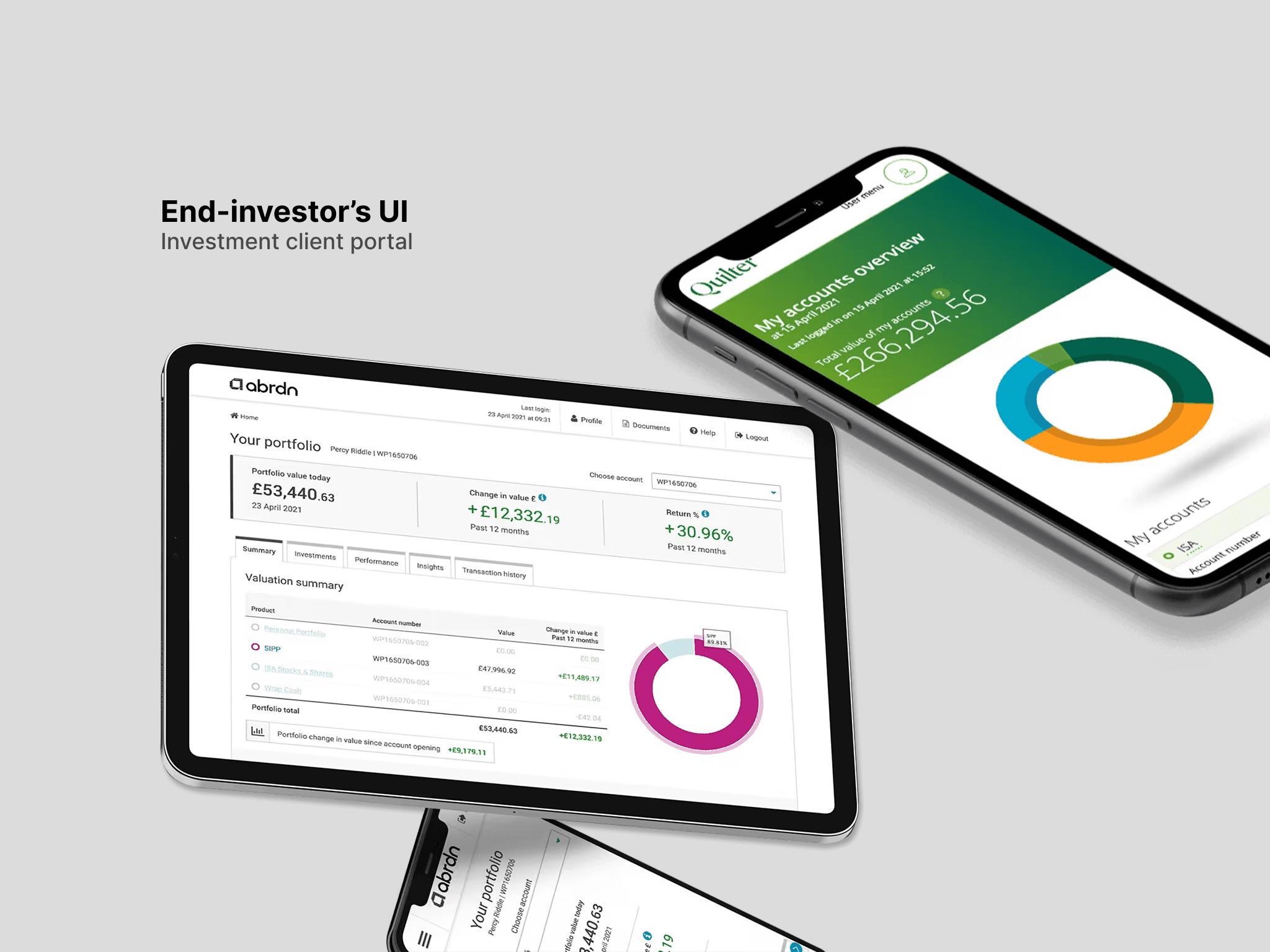
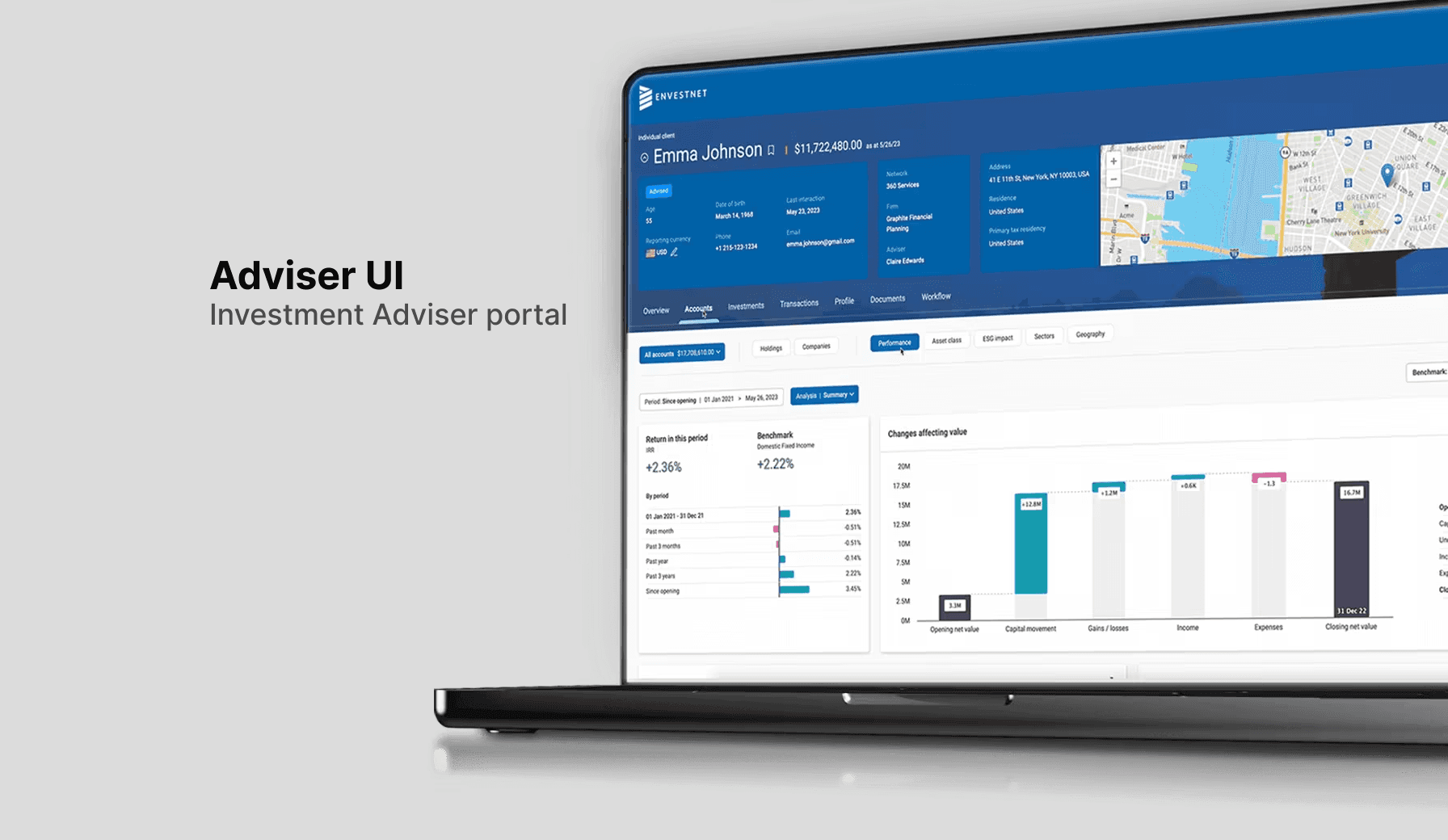
FNZ began shifting toward a platform-first model: building a core set of configurable products that could serve multiple partners (FNZ’s term for clients), across markets and regulatory contexts. The reality was often B2B2B2C—banks and insurers serving advisors, who in turn served end clients.
This shift triggered organisational change at speed. FNZ acquired close to 20 companies in a short period, growing to more than 6,000 people globally. Design, like many functions, was trying to find its footing in a rapidly evolving environment.
My role evolving with the organisation
I joined as a Senior UX Designer, part of a 12-person design team, working hands-on across client projects. Very quickly, the scope of my work expanded.
In 2023, during a broader reorganisation, I stepped into the role of Head of User Experience, reporting into Digital leadership. The team reduced in size—from 12 designers to 8, and later to 4—but expectations increased. Design was no longer just about delivery capacity; it was expected to help FNZ mature into a product organisation.
This dual pressure—less people, more impact—shaped much of my leadership approach.
Shifting design from “resource pool” to strategic partner
One of the biggest challenges was cultural.
Design at FNZ had traditionally been seen as decorative or supportive—a service layer rather than a strategic function. Designers were often treated as a shared resource pool, brought in late, and overridden by product owners, solution consultants, or engineers.
Some designers had grown used to this. Others were frustrated by it.
My goal was to change that dynamic—not through theory, but through evidence.
I focused on:
Demonstrating how user research accelerates decision-making
Showing how early design involvement reduces downstream rework
Making design legible to non-designers through service blueprints, clear narratives, and concrete outcomes
I used the McKinsey Design Maturity Index as a benchmark to understand where FNZ stood and to frame conversations with leadership in a language they already respected.
Progress was uneven. Leadership churn and constant organisational change made sustained momentum difficult. But the work created space for design to be taken more seriously—and for designers to operate with more confidence and clarity.
Key Highlights
Building design capability under constraints
As a design leader, I focused as much on how we worked as on what we produced.
I introduced:
A skills matrix to assess team strengths, gaps, and development priorities
Clear design rituals (weekly critiques, structured reviews, shared research readouts)
A lightweight FNZ Design Framework, inspired by the British Design Council’s Double Diamond, adapted to FNZ’s delivery reality
Tooling mattered too. I led the move to Figma Enterprise, and encouraged early adoption of AI-assisted design tools—using features like Figma’s generative capabilities to speed up discovery and prototyping.
During this period, I also completed IDEO-U’s Leading for Creativity course, which directly influenced how I approached negotiation, creative collaboration, and leadership in high-tension environments.
Global client work and platform impact
Alongside organisational work, I remained deeply involved in complex client engagements—often where design maturity was most tested.
I led or contributed to strategic UX work with:
BMO (Bank of Montreal) – running a long-term research program with advisors and associates across North America
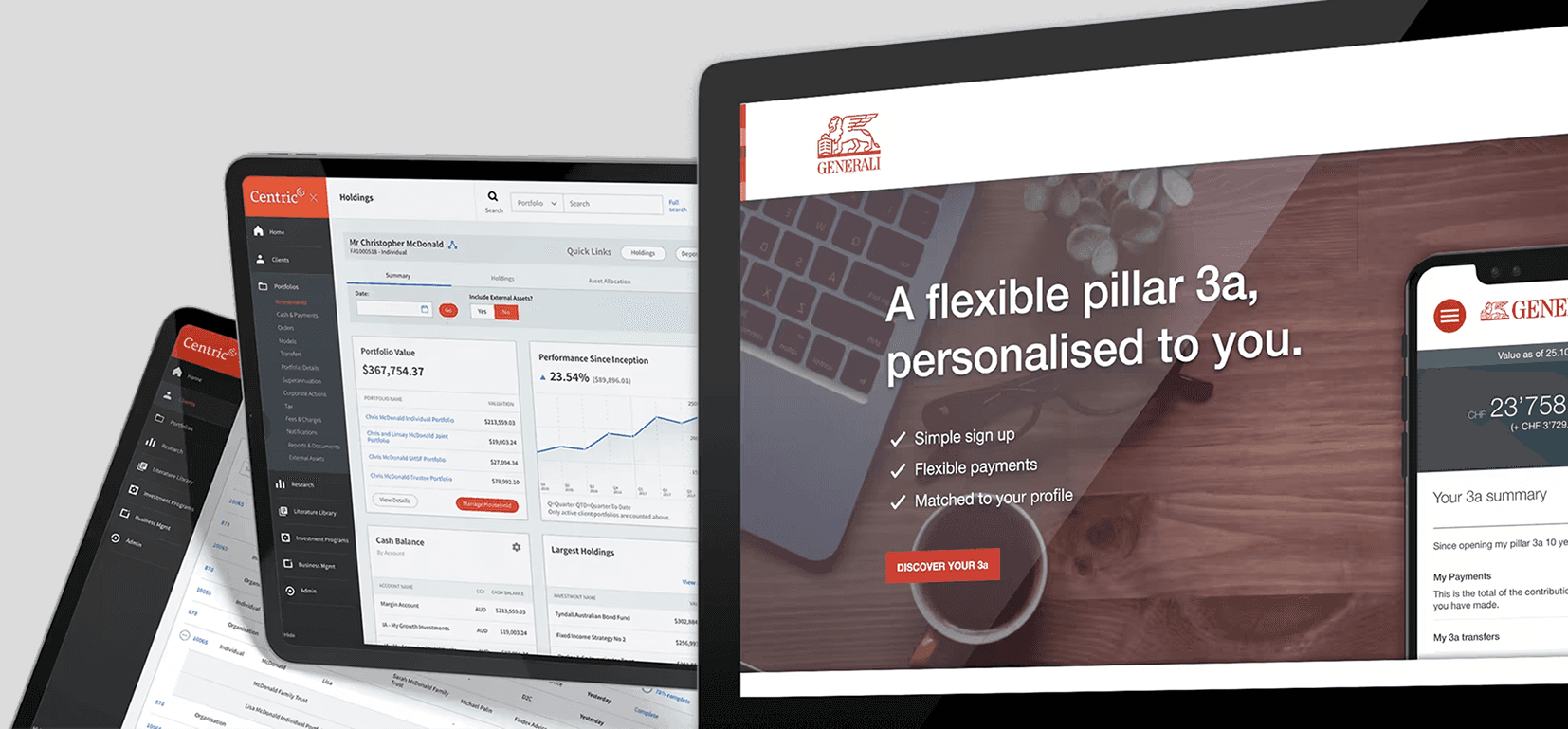
Colonial First State (Australia) – supporting the design of CFS Edge, a digital advisor platform co-created with the market
Momentum Wealth (South Africa) – exploring new engagement models to make wealth services more accessible
While each engagement had local nuance, the intent was always the same: ensure that client-specific insights fed back into improving the core FNZ platform, not just one-off solutions.
Deep focus: AI-enabled advisor workflows
From 2024 onward, a growing part of my role sat at the intersection of UX, product strategy, and AI.
I became the primary design lead shaping how artificial intelligence would be embedded into FNZ’s advisor experience—not as a novelty, but as a practical tool in a highly regulated environment.
My work focused on:
Advisor-centric AI prototypes: assisted search, summarisation, and decision support
Hands-on testing with advisors to validate usefulness, trust, and clarity
Operational workflows such as trading, research, onboarding, and client reviews—redesigned with AI as an assistant, not a replacement
This work culminated in the global launch of FNZ Advisor AI in August 2025.
Key features influenced by this design-led approach included:
Automated meeting transcription and follow-up insights
Real-time data signals drawn from over $2T in assets on platform
Governance and guardrails to minimise AI hallucinations and maintain regulatory trust
I also worked closely on aligning these experiences with FNZ’s strategic partnership with Microsoft, integrating Azure AI and Microsoft 365 Copilot to enable industrial-scale AI adoption rather than isolated experiments.
Research as a lever for credibility
One of the most impactful—and fragile—initiatives during my time at FNZ was the BMO research program.
Originally started by a senior UX researcher, I took ownership of the program and ran it end-to-end for over a year after he left the company.
Between January 2023 and May 2024, we conducted:
12 research studies (interviews, usability tests, unmoderated surveys)
With 240+ participants from the BMO Advisory Forum
Covering advisors, portfolio managers, and client service associates
We tested core platform workflows—such as KYC journeys built in FNZ Studio—and fed insights directly back into product teams.
The outcomes were tangible:
Strong endorsement from BMO stakeholders
Increased trust and confidence from end users
Improvements that benefitted the broader FNZ platform, not just one client
Despite this, the program was eventually paused due to competing priorities and resourcing constraints—a familiar story in large organisations. Notably, demand from clients never disappeared.
Design sprints done properly
If there’s one engagement that consistently demonstrates the value of early UX involvement at FNZ, it’s the BMO Client Portal.
We kicked off the project with a design sprint, run in person in Toronto. In one intense week, we:
Aligned on the core problem
Prototyped solutions
Tested them directly with users
The sprint did more than validate ideas—it built trust.
From there, collaboration continued smoothly across time zones and teams. Within a year, the Client Portal had progressed faster and further than parallel initiatives, to the point where it exposed dependencies other streams couldn’t yet support.
It was a clear signal: when design is involved early and structurally, outcomes improve—for products, teams, and relationships.
What this chapter gave me
FNZ was not an easy environment. It was complex, political, fast-moving, and often ambiguous.
But it was also a powerful learning platform.
It sharpened my ability to:
Lead design in uncertain, high-stakes contexts
Translate between technology, business, and human needs
Advocate for design without relying on authority
Build momentum even when structures are unstable
Most importantly, it reinforced a belief I still carry: good design doesn’t just make products better—it makes organisations think more clearly.

Go Back

